Supporting Local Communities Can Be a Key Business Differentiator
For new SI member Wexford Science & Technology, it’s been crucial to success.
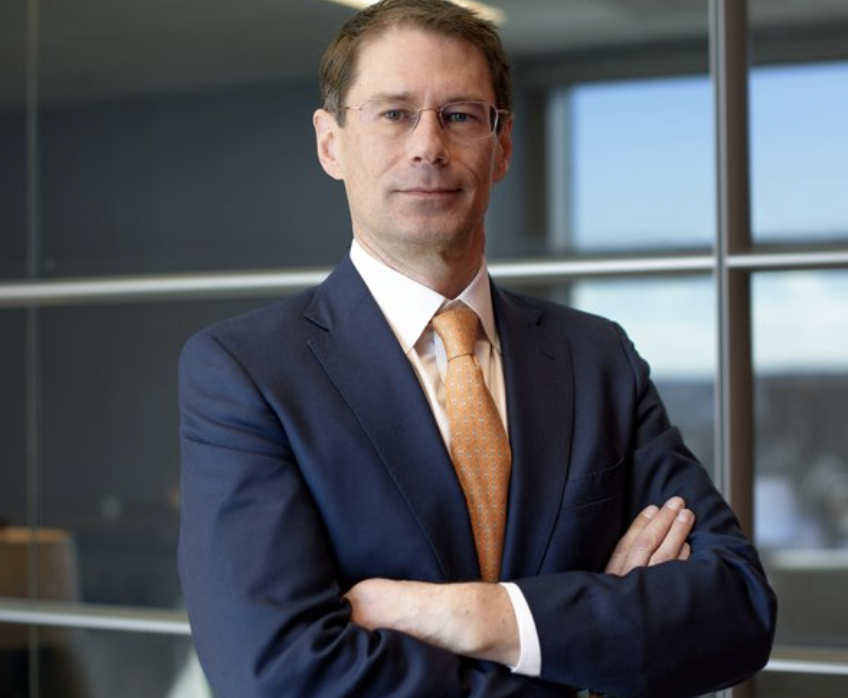
CEO Ted Russell: “We make sure that whatever we're developing and building, the community has input, the community has access, and the community feels a part of it.”
One thing that’s important to remember about Corporate Social Responsibility is that it isn’t just the right thing to do. It’s also the smart thing to do from a business perspective.
If you want an example, look no further than new Satell Institute member Wexford Science & Technology. Over the last 20 years the Baltimore-based real estate development firm has partnered with universities and other clients to create powerful — and economically thriving — knowledge communities in places like Baltimore, Philadelphia, Pittsburgh and North Carolina’s Research Triangle.
Crucial to making those projects work — and to Wexford’s success — is the deep level of engagement the firm creates with the neighborhoods in which its clients operate. Whether that’s facilitating direct investments in those communities (schools, for example), or simply opening its buildings to local residents, the focus is on making the projects a win for all involved.
In this conversation, Wexford CEO Ted Russell talks about how community engagement has been a key differentiator for the company — and why Wexford feels so at home as part of the Satell Institute.
* * *
Wexford is…
…a privately owned development company that was established just over 20 years ago. We focus exclusively on partnering with universities, academic medical centers, research institutes, and innovative companies to create innovation districts — what we call knowledge communities. Historically, most of our work has been focused on life sciences, but it’s also encompassed technology, healthcare, and academic spaces.
We focus our business…
…around several pillars. One is to execute the strategy for a client institution. A second is to create wonderful spaces where institutions and private industry can collaborate. Third is making sure that the spaces we develop are also incorporated and ingrained into the community.
That's really where we cross over with the efforts of the Satell Institute. The community is really important to us. Oftentimes our clients are big, somewhat intimidating institutions, and the communities around them have been left behind or disenfranchised in some way. We see our job as providing a connective point where the institution and community can meet.
I’ve been working…
…in real estate finance for the majority of my career. I really wanted to be a part of a small company that builds and creates things, and that's when I met Jim Berens, who’s our founder and principal and still very active in the business. Jim's insight was our investment thesis — if you build great relationships with institutions and develop in their shadows or on their campuses, you're going to do pretty well from an investment standpoint.
Philadelphia…
…is a great example of what we do. In the 1990s Market Street in West Philadelphia was an intimidating and, in some ways, unsafe place to be. The historical mindset of a lot of urban universities was to build walls, keep students in, and keep the community out.
Thankfully, there was a mega-shift in that mindset and a recognition that we need to be ingrained in the community. You can really see the result in what Penn and Drexel did there and what’s happened in West Philadelphia. It’s just been a boom of economic growth.
Corporate Social Responsibility…
...is very important to us. We actually have a chief community officer whose primary role is community engagement, activation, and activity within our largest knowledge communities.
We make sure that whatever we’re developing and building, the community has input, the community has access, and the community feels a part of it.
We also bring the community into our buildings to have meetings. In Baltimore last year we hosted over 280 events, and 71 of them were for nonprofits and community associations. We create spaces where they feel welcome. There’s a place for two community members to come in, have a cup of coffee, and meet. And they could be next to two scientists who are trying to solve the next big problem.
Focusing on community engagement…
…has really helped our brand recognition and growth. When we’re working with our universities, we let them know upfront that the perception of them in the community may be very different than they think it is. But we show them that building a connection between the community and institution makes for a more successful project.
There’s no question that our approach boosts morale in our own company. It’s great to see community leaders come into our buildings, or to get a thank you note saying, hey, you guys went above and beyond.
The average tenure of our employees is well over 10 years. We’re a great company to work for because of the impact we have not only with our institutions, but within our communities.
We got involved in the Satell Institute...
… when SI was expanding into Baltimore. Working with nonprofits is just embedded in what we do. Here in Baltimore, we’ve been working with the Southwest Partnership and the Mother Mary Lange School, which is similar to the Powel School in Philadelphia.
I actually think no less than three elementary schools have been delivered subsequent to our initial investment in a knowledge community. Now, it takes great leadership — like John Fry when he was at Drexel — to drive those things. But we certainly are a catalyst to make those types of things happen, and we’re really, really proud of that.
When I went to a Satell Institute event in Baltimore, I learned…
…that it doesn’t just pull together companies, it pulls together the leadership of companies — decision makers — which I think is really important. Talking to decision makers about the importance of engagement and growth is pretty powerful.
I've been in Baltimore for most of my career, and thanks to Satell I had a chance to sit at the table and talk about strategy — and just life. I hadn't had that opportunity with some of these really impressive executives. And so beyond the community side of Satell, the networking side of it is great. And hopefully there’s more of it to come.