Flagger Force is a case study in why Corporate Social Responsibility works
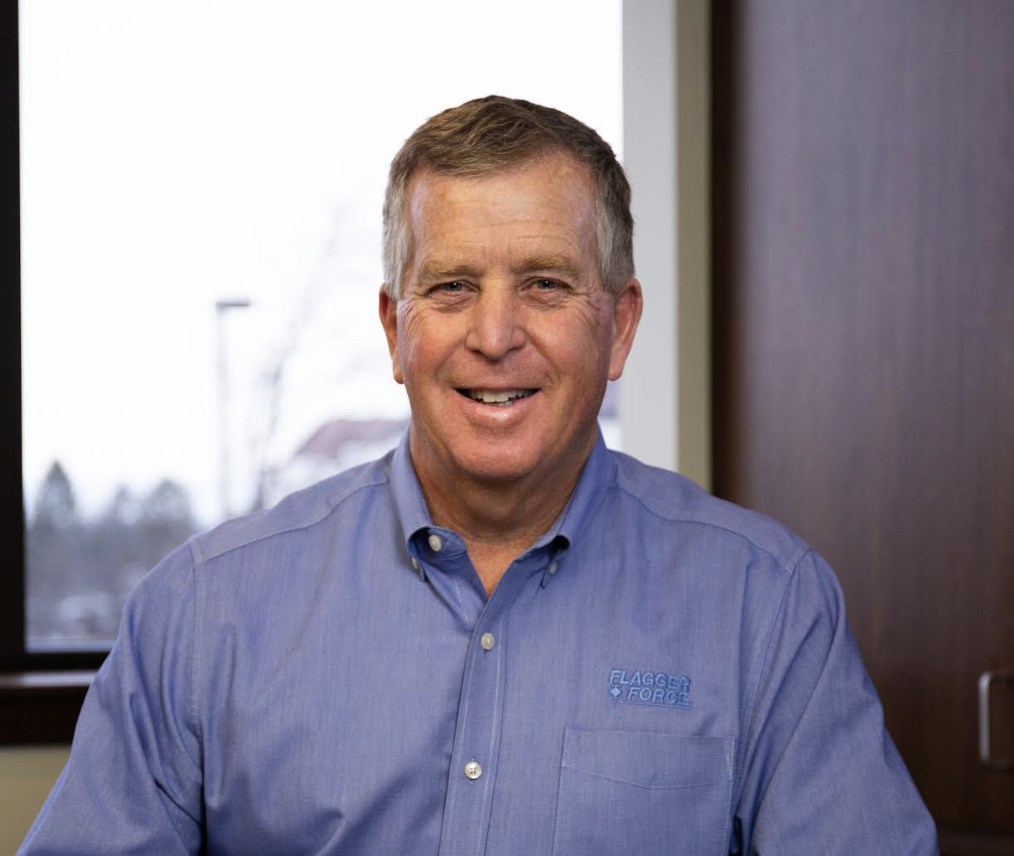
CEO Mike Doner: “Caring about people and building a successful business have never been competing ideas. They support each other.”
Ask founder and CEO Mike Doner what’s made his company, Flagger Force, so successful over the years, and he’ll point to one simple thing. “We’ve been able to maintain a culture of caring,” he explains.
In many ways that culture is a natural extension of the business that Flagger Force, a new Satell Institute member, is in: Providing safe, reliable traffic control services for utility, construction and infrastructure projects in 16 states.
But the Pennsylvania-based company isn’t just focused on protecting drivers and road crews. Caring infuses every aspect of Flagger Force’s operations, from the way it trains and supports its employees to its commitment to providing second chances and helping remove barriers that can prevent people from building lasting careers.
All of it aligns perfectly with the approach of the Satell Institute: building a strong business; creating meaningful opportunities for employees; and supporting communities.
In this conversation, Doner reflects on the values that have shaped Flagger Force, the importance of creating opportunity, and why the company’s commitments through the Satell Institute are meaningful to him.
***
Flagger Force…
…offers short-term traffic control services, primarily focused on utilities. I was in the temporary staffing industry prior to starting Flagger Force, and I had identified a need for what we do. It took a little while, but in 2002 I wrote the business plan for Flagger Force and began building the company.
Our company has grown…
…from four employees and a truck to about 3,000 employees and 1,500 trucks. The industry has also matured. In fact, I'm honored to be recognized as someone who’s helped professionalize our industry.
Next year we celebrate…
…our 25th anniversary. We started as a family business, and the ability to maintain a culture of caring has been crucial to us. Growth can change a company very quickly. You add people, locations, clients, and layers of leadership. My responsibility has always been to make sure growth does not change the fundamentals of who we are.
The values, vision, and mission of Flagger Force…
…are very different than at a lot of companies. There's nothing in our values that says we want to be the biggest. It's leadership, integrity, respect, and trust. I joke that I'm the only one at the company whose business card has the values, vision, and mission on it because I'm 65 and I need to make sure I don't forget them. But I wrote the darn words.
A culture of caring…
…is woven into the fabric of the company. If you visit our property, you see that every single vehicle in the parking lot is backed into its parking space — because it’s safer to pull out of a parking space facing forward than it is to back out into a live travel lane. So all our employees start their day focused on safety.
There’s an expression…
…that I believe wholeheartedly: Nobody wants to know how much you know until they know how much you care. That matters when you’re training someone. It matters when you’re coaching them. And it especially matters when you have to hold someone accountable.
But once they know you care, now they will want to know what you know. So that culture of caring leads to employee retention, accountability, and care for the customer and the public.
One way we support our employees…
…is the Flagger Force Employee Hardship Grant Program. When an employee runs into trouble — a house fire, car problem, medical issue — they can apply for a grant from the hardship fund, and they don't have to pay it back.
That kind of support…
…makes a difference. The people that work for me are people that have worked at McDonald's, Amazon, Walmart, Chick-fil-A, whatever. They have viewed a job as just a job. But when they see how many employees have stayed with me for five years, 10 years, 15 years, 20 years, they recognize this is something different.
Our focus on second-chance hiring…
…started because, when I launched this business, people took chances on me. And so my attitude is, “I don't really care about what you've done in your past. What are you ready to do right now?”
We have helped employees pursue their GEDs. We have worked with employees and probation officers to arrange required meetings around work schedules so that no one unnecessarily loses a work opportunity. And we continue looking for ways to remove barriers that can prevent a willing employee from moving forward.
You still have to show up. You still have to work hard. You still have to meet our expectations. A second chance is an opportunity, not an absence of accountability.
The two organizations we sponsor through the Satell Institute…
…are an example of how we support our employees, our business, and the community at the same time.
One is Construction Angels, which provides financial relief to families of people who’ve lost their lives in construction-related fatalities. I joined their board, and I realized this is what the Satell Institute was built for and why its four-year giving requirement is so important. Construction Angels supports people like our employees, but it’s still gaining its footing and it needs to be assured it can have money coming in to invest in structure and support. Our commitment helps provide that.
The other organization is Rasa Legal, which uses technology to help eligible individuals navigate the process of clearing or sealing criminal records. I never realized how difficult it is to clear a criminal record. It's very expensive, and it can take a really long time. But they developed an app that helps you get things cleared.
These are two relationships that I feel honor the vision that Ed Satell has set out, along with my desire to help the people who have helped build Flagger Force.
Going forward, I want to…
…continue to support my employees and show that I care, not just with my handshake, not just by company policies, but by finding unique solutions that help them in a wide variety of ways. To me, caring about people and building a successful business have never been competing ideas. They support each other.