At fast-growing Trumark Credit Union, putting the community first is a savvy strategy for success.
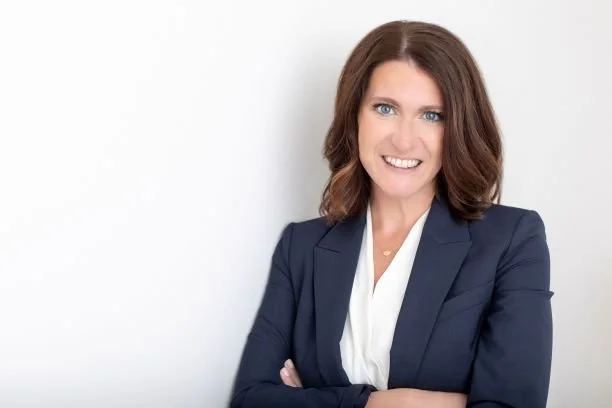
CEO Kelly Botti: “When we show up for our community, our community shows back up for us.”
“Our responsibility is to make better any community that we’re involved in,” say Kelly Botti, CEO of Trumark Credit Union.
It’s a responsibility that Trumark, a new SI member, has more than lived up to under Botti’s transformative leadership. Not only do its 24 branches (and robust digital capabilities) deliver essential financial services to its members, but Trumark excels in other areas that strengthen communities: Promoting financial literacy. Working with nonprofits. Creating credit opportunities for people traditionally shut out of the financial system.
Like all credit unions, Trumark operates as a non-profit. But the success the organization has had in recent years offers plenty of lessons for for-profit companies as well.
In this conversation, Botti (who also serves on the community financial institution advisory council for the Federal Reserve Bank of Philadelphia) talks about Trumark’s community-first culture, the changes she’s led since becoming CEO, and why SI was a “natural fit” for Trumark.
* * *
Trumark is…
…a $3.7 billion financial institution located in greater Philadelphia. We’re a credit union, which is a not-for-profit financial cooperative. We operate very similarly to community banks, but our model exists to benefit our members.
I am…
…an attorney by trade, but my entire career has been in financial services. I had the opportunity to join Trumark in 2014 as corporate counsel. From my first day, I actually felt very cared for. When people ask you how your weekend was, they really care how your weekend was.
Between 2008 and 2020…
…everybody in the credit union industry was really focused on safety and soundness — long-term health. Profits really matter. We have to make sure we’re steady.
The pandemic and 2020 shifted that. Digital financial services became predominant among every demographic, and that shifted the whole value proposition. Service ended up not being a differentiator anymore.
So when I became CEO in 2022, our responsibility was to think about, what does it mean to be a credit union in this time of great transformation?
As CEO…
I’ve focused on a few big areas. We really focused on our operating model — how decisions get made, what our technology looks like. We made sure that everything was built to scale.
Talent is another focus — having the right people leading the right initiatives is really crucial to us. And I spent a lot of time making sure our team members felt really empowered to act and have a voice. That required, for me, a lot of visibility, listening and acting.
Third was our recent rebrand, which we launched in April. Our outsides now match our insides. I never wanted our rebrand effort to feel like just a logo change. So we also offered a brand new product suite for our consumers, and we rebuilt our entire business banking division. We are now officially a full-service shop from a product and services standpoint.
My best advice for anybody who’s willing to undertake a transformative effort is…
…you’ve got to have a stiff chin because you get uppercut quite a bit.
When people finally do feel safe enough to talk, you’re not always going to be comfortable with the things they’re going to say. But you’ve got to give them space and listen to it.
Corporate Social Responsibility…
…isn’t an act of charity for us. Our responsibility is to make better any community that we are involved in.
The coolest thing is, nobody here even really notices they’re doing it. They just show up in communities — attending events, being part of organizations. It’s an extension of who they are.
My responsibility is to model that. I’m privileged to sit on an advisory council for the Federal Reserve of Philadelphia. I’m on the board of the American Red Cross Southeastern PA Region. I sit on the board of one of our biggest vendors. Those are really powerful opportunities. But I also coach my son’s soccer team, and I’m our PTO president.
We recently recast our strategic vision…
…and community engagement is a germane pillar of that strategy. How do we create credit opportunities for individuals that otherwise wouldn’t be afforded access to it?
We have a ton of municipal relationships. What are the needs of their constituents, and how are we furthering our impact there?
And we have a foundation. We’re partnering with schools on financial literacy, and with nonprofits to amplify their work.
Community is…
…our competitive advantage. When we show up for our community, our community shows back up for us.
I was introduced to the Satell Institute…
…when a good friend of mine invited me to one of the conferences. I was really impacted by the caliber of people that were attending, and by the thoughtfulness of the content. It was so reverent to the service affinity of our region, and I was just so touched by that. The Satell Institute was just a natural fit for us.
Our strategy for the future…
…is really to grow with impact. But how we define growth is through the engagement of our members and the tangible impact we can make in our communities. The story that we will tell is going to be about creating deeper connection, deeper responsibility, and deeper affinity so that our communities feel that we’re an active part of their health and growth.
At the end of the day, it’s like when you have a recommendation for a plumber. Everyone in Philadelphia is like, “I got a guy,” right? Well, that’s my goal: For Philadelphia to know that Trumark is their guy.