New SI member Traci Donnelly believes it’s essential for nonprofits to operate with all the rigor of for-profit companies. And she’s leading the charge to make that a reality.
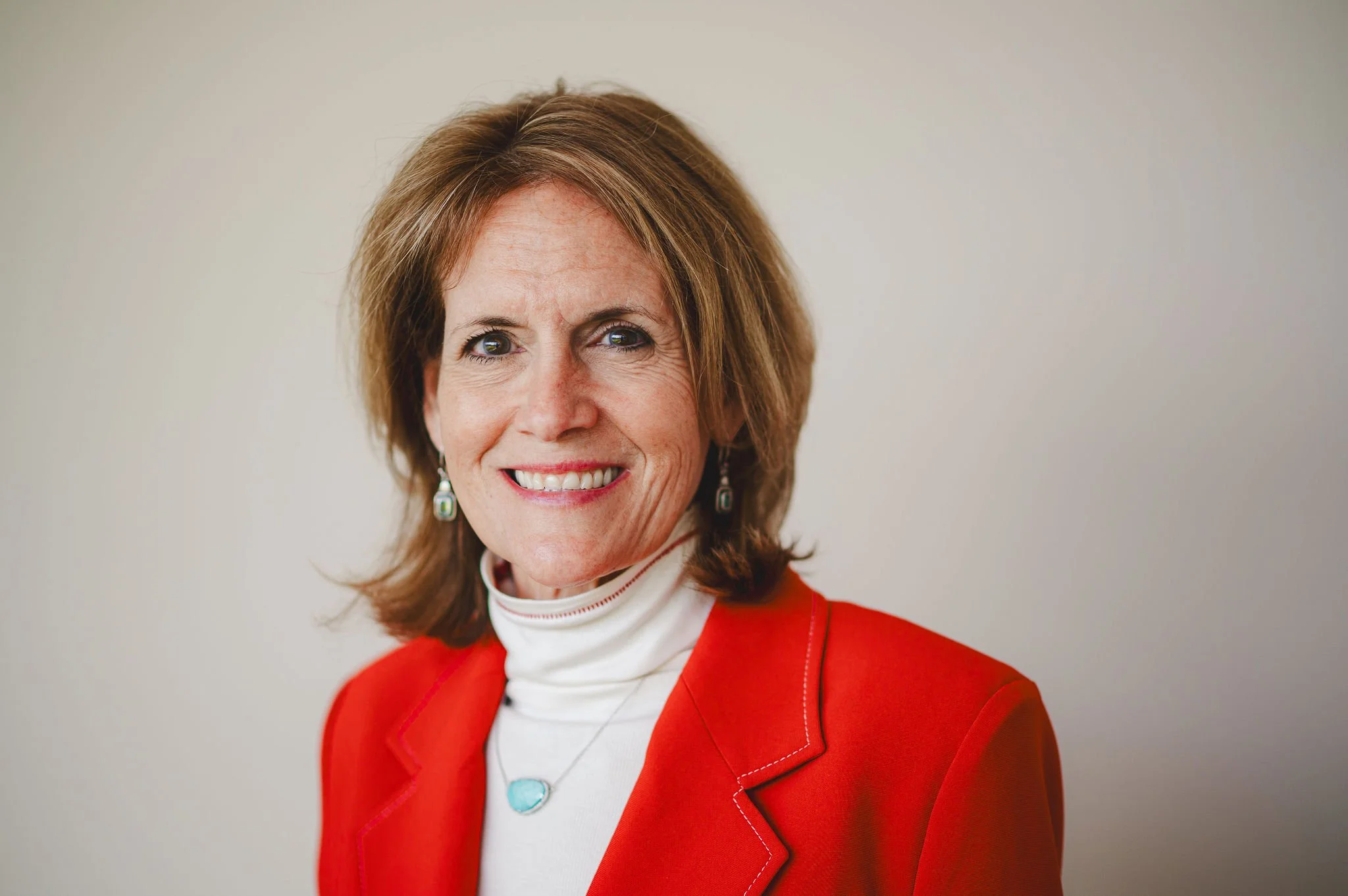
Donnelly: “We run our entire organization through data platforms. We incentivize work just like you would in the business world.”
Traci Donnelly, longtime head of the Child Center of NY, a new Satell Institute member, still recalls the highest praise she ever received.
“I think the best compliment we ever got was when someone said, ‘Oh, I get it: You’re actually a business disguised as a not-for-profit.’”
Spend a few minutes talking to Donnelly and you’ll quickly discover that, though she’s a veteran of the nonprofit world, she’s as strategic, savvy and decisive as any Fortune 500 CEO.
At the Child Center of NY, for example, Donnelly has led a massive turnaround that’s taken the social services organization from floundering to flourishing.
More recently, she and the Child Center’s board have launched a new organization called Make An Impact, whose mission is to help other nonprofit and purpose-driven outfits operate with all the data-informed discipline — and creativity — of for-profit businesses.
It’s a goal that aligns perfectly with the Satell Institute. Not only does a business-minded approach allow nonprofits to serve their constituencies more effectively; it increases the trust that for-profit companies and other donors have in the nonprofit sector. All that leads to deeper partnerships — and greater impact.
“We should be able to demonstrate what the return on your investment is and that you're doing something that’s making a difference in people's lives,” Donnelly says. “And if we can’t, we ought to not take that money.”
An Extraordinary Turnaround
Donnelly has a master’s degree in education, but she’s spent the bulk of her career working for nonprofit organizations. “It's what I love, it's what I've always done,” she says. “Being able to affect larger-scale change was the reason that I wanted to move up within the industry.”
Donnelly became CEO of the Child Center of NY in 2014, eyes wide open that she was inheriting a difficult situation. Though the organization had annual revenues of $32 million, it had just $7,000 in net assets — and owed $6 million to the federal government.
But Donnelly and the team she put together were ready for the challenge. When it came to that debt, she met with government officials and laid out a plan for repayment — if they’d agree to reduce the interest charges that were accruing. “I said, ‘We do owe money, and I want to hold up our obligation. But it'll be over a long term so we can continue to do our work.’” The government agreed, but added a condition of its own — that Donnelly agree to share her approach to nonprofit management with other interested organizations.
Crucial to Donnelly’s management approach is data — creating KPIs around everything from broken appointments to staff turnover. Child Center of NY then uses those KPIs to set priorities — and make progress. “We run our entire organization through data platforms,” Donnelly says. “We incentivize work just like you would in the business world.”
The results have been impressive, both financially and in terms of community impact. Today, Child Center of NY has annual revenue of $115 million and net assets of $15 million. Just as important, the number of people it serves has exploded — from 14,000 to 60,000.
Power in Numbers
Through the years, Donnelly has indeed been asked to share Child Center’s KPI dashboard with other nonprofits. It’s helped her realize the real power isn’t in the numbers themselves; it’s in what organizations do with the numbers.
“I would be invited to their meetings, and they’d share the data with their staff — ‘Your broken appointments are up, engagement is low. Do better next time,” she says. “And I was like — wait, everybody sit down. We’re going to get from X to Y by when? What is your plan? Who’s responsible?’ I started to help them create business plans.”
It was out of such experiences that Make An Impact was born. The new organization — launched with a significant investment by Child Center of NY, whose board believed it had a responsibility to share what works — focuses on several areas, including an incubator program for emerging organizations; an accelerator program that aims to scale successful initiatives; and a content studio that lets organizations better tell their stories through film, podcasts and digital media.
But perhaps the most significant arm of Make An Impact is its Impact Collaborative, which (so far) has brought together more than 700 purpose-driven organizations across the country. As members, organizations get access to group discounts on things like technology services.
But even more powerful is the data that members share among themselves — and the KPI dashboard (augmented by AI) that lets them assess how they can improve their performance.
“If somebody in Texas has a broken appointment rate that's 10 percent and mine is 18 percent, I want to know what they're doing,” says Donnelly. “And because we’re collecting all this data, the AI can tell you that if you continue this broken appointment rate annualized, you’ll lose $847,000.” That kind of insight is instantly clarifying. And motivating.
Over time, Donnelly believes Make An Impact can actually help bring about systemic change. She envisions the data insights the organization is generating being shared with the healthcare industry, as well as federal, state and local governments that fund the delivery of social services. The more data there is, the more that spending can be concentrated on what works.
“We need to be considered economic development partners,” she says, “not a not-for-profit that you are just simply giving a check to.”
Joining Satell
Donnelly was introduced to the Satell Institute through Paul Howard, market leader for the NY chapter. The appeal was instantaneous. “I really wanted to get alongside like-minded people — people who understand the value of investing in not-for-profits that want to do good.”
She’s equally aligned with SI’s requirement that members commit to funding Nonprofit Affiliates for four years. “When you have a really strong relationship year over year, and you know what to expect with your fundraising, you can plan,” she says. “You can be a strategist. And you can also align with your funder and say, what goals are you trying to accomplish? How can we work together to do that?”
Given the way she approaches her work, Donnelly says she’s often approached by for-profit firms about jobs. But for now, she’s happy where she is.
“I don't feel the for-profit world needs me,” she says. “I think there's a million of me in the for-profit world, but in this world, there's not many of us that are thinking this way. I want to keep finding better ways to tell our stories and give people the credibility they need so they can talk about their work — and have data behind them to back it up.”